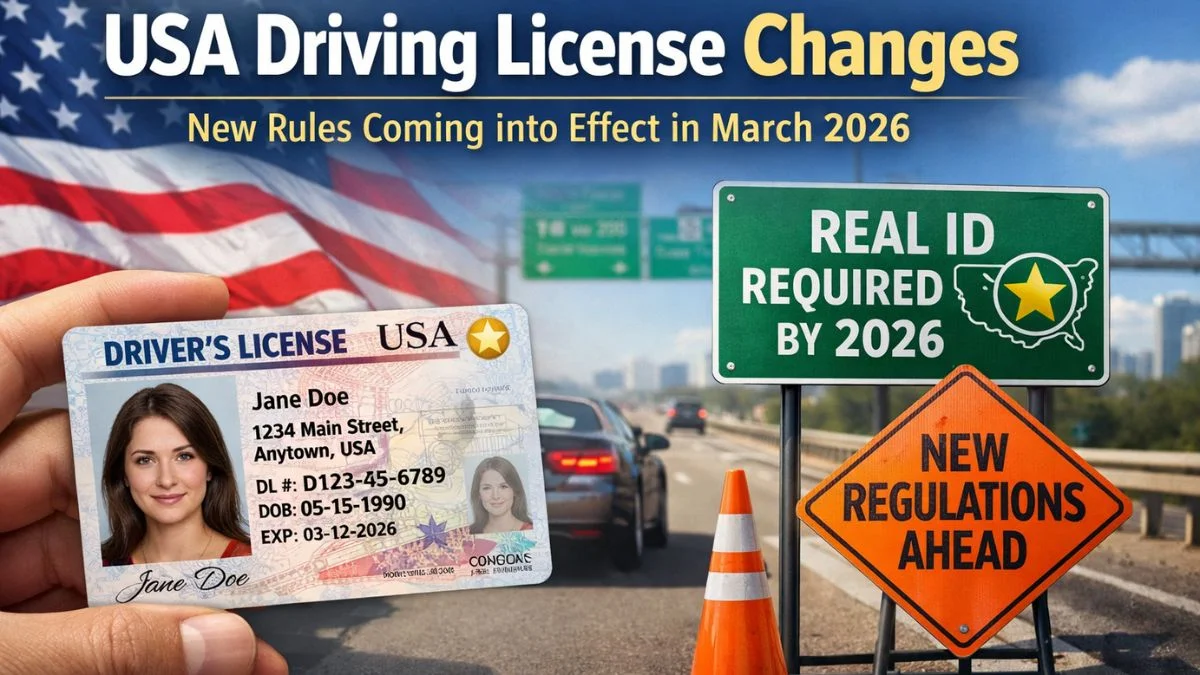
USA Driving License Changes 2026: The rules of driving in the United States are changing—and not in small ways. From stricter ID checks at airports to new safety rules for senior drivers, March 2026 marks a turning point that could affect millions of people. If you drive, travel, or plan to renew your license soon, these updates could save you time, money, and stress.
What’s Changing in 2026?
The new driving license updates focus on three main areas: identity verification, road safety, and technology-based enforcement. These changes aim to improve security while reducing accidents across the country.
Key highlights at a glance:
- REAL ID enforcement becomes stricter
- New renewal rules for senior drivers
- AI-powered traffic monitoring systems
- Instant insurance and violation checks
REAL ID Rules Get Serious
Starting in 2026, REAL ID compliance is no longer optional for travelers.
What this means for you:
- You need a REAL ID (star-marked license) for:
- Domestic flights
- Federal buildings
- Military bases
- Non-compliant ID holders may face:
- Extra airport screening
- Delays of up to 30 minutes
- Additional $45 verification fee
Quick Tip:
If your license doesn’t have a star, visit your local DMV as early as possible to avoid last-minute delays.
New Rules for Senior Drivers
The government is introducing stricter guidelines to ensure road safety among older drivers without limiting independence.
Updated renewal system:
| Age Group | Renewal Frequency | Required Checks |
|---|---|---|
| 65–69 | 4–6 years | Vision (if needed) |
| 70–74 | Every 4 years | Vision + Reaction Test |
| 75+ | Every 2 years | Vision + Cognitive + Medical |
What’s new:
- Mandatory vision and reaction tests
- Cognitive assessments for drivers 75+
- Shorter renewal cycles
These changes help detect health-related driving risks early while allowing seniors to continue driving safely.
Tech-Based Enforcement Is Expanding
One of the biggest shifts in 2026 is the use of smart technology to monitor drivers in real time.
New enforcement tools include:
- AI cameras to detect phone usage
- Automatic insurance verification systems
- Point-to-point speed tracking systems
Penalties:
- Fines between $300 and $1000
- Higher penalties for repeat offenses
Why this matters:
Authorities report that pilot programs have already reduced accidents by up to 30%, making roads safer for everyone.
Emission and Vehicle Compliance Rules
Older vehicles are also under scrutiny as part of environmental efforts.
Key changes:
- Stricter emission checks
- Clean-air zone fees in major cities
- Mandatory repairs for high-pollution vehicles
This move aims to reduce urban pollution and promote cleaner transportation.
How to Stay Compliant (Step-by-Step)
Staying ahead of these changes is easier if you act early.
Follow these steps:
- Check your license for REAL ID compliance
- Gather documents:
- Birth certificate
- Social Security proof
- Address proof (2 documents)
- Book DMV appointments early
- Seniors should:
- Schedule medical checkups
- Prepare required reports
- Avoid peak DMV hours to save time
Estimated Costs:
- License renewal: $20–$50
- Optional safety courses: up to $100
Impact on Everyday Drivers
These updates may feel strict at first, but they aim to create safer, more efficient roads. Younger drivers will face stricter monitoring, while older drivers can continue driving with proper health checks.
For frequent travelers, upgrading to a REAL ID is now essential—not optional.
Key Takeaways
- REAL ID is mandatory for travel and federal access
- Senior drivers face stricter but fair safety checks
- AI enforcement will reduce violations and accidents
- Early preparation can help avoid penalties and delays
FAQs
1. When is REAL ID fully required?
REAL ID became mandatory for federal purposes in May 2025, with stricter enforcement continuing into 2026.
2. Do senior drivers need to take driving tests?
No full road test is required nationwide, but health and cognitive checks are mandatory for older age groups.
3. What happens if I don’t upgrade my license?
You may face travel restrictions, additional screening, and extra fees.
4. How much are fines under new tech enforcement?
Fines range from $300 to $1000 depending on the violation and frequency.
5. Are these rules the same in every state?
Core rules are federal, but some details vary by state, so always check your local DMV website.
Conclusion
The 2026 driving license changes are designed to make roads safer and systems more secure—but they also require drivers to be more prepared than ever. Whether it’s upgrading to a REAL ID, adjusting to new tech enforcement, or meeting updated renewal rules, taking action now can save you from future hassles. Staying informed is no longer optional—it’s the key to smooth and stress-free driving in the years ahead.