
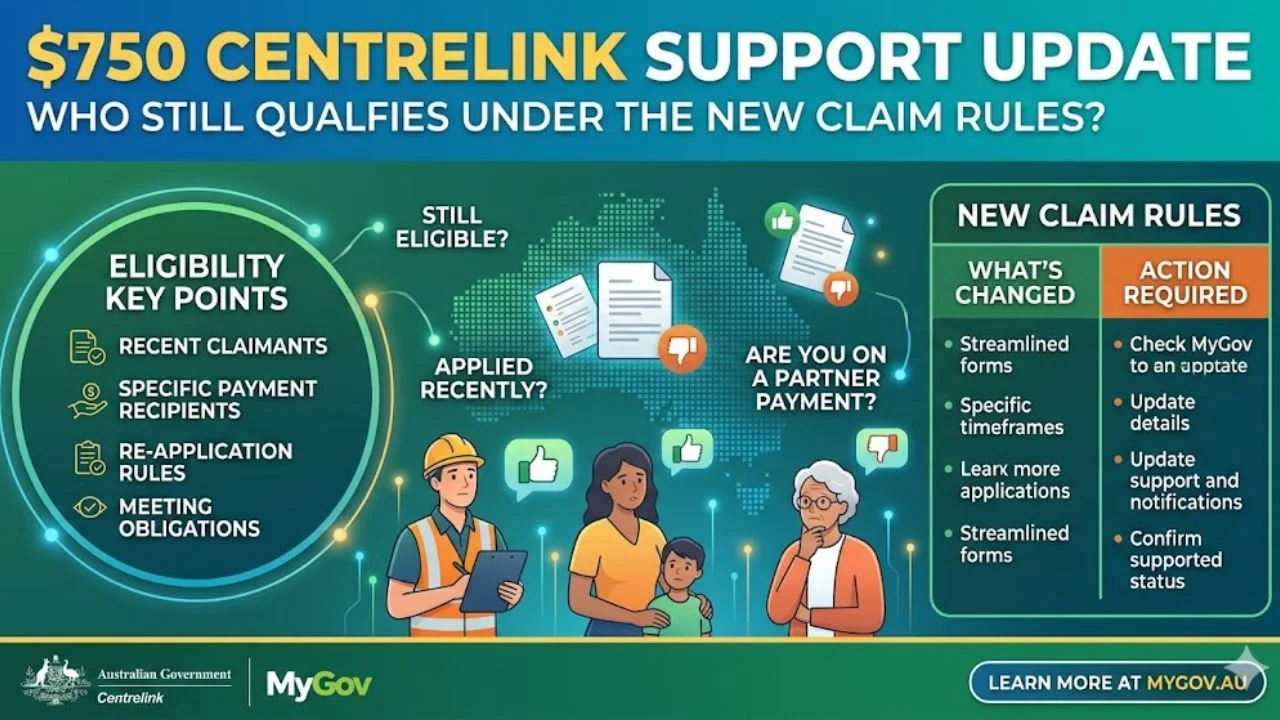
$750 Centrelink Payment Update 2026: A fresh update to Australia’s $750 Centrelink support has caught the attention of millions. But this time, it’s not a blanket payment. The rules have changed, eligibility is tighter, and many people may no longer qualify automatically. If you’re relying on government support in 2026, here’s what you need to know before the next payout cycle begins.
What’s New in the $750 Centrelink Support 2026?
The government has shifted from broad stimulus payments to a more targeted support system. Instead of giving everyone the same benefit, payments are now focused on people who are most affected by rising living costs.
Key changes:
- Payments are no longer universal
- Priority given to vulnerable groups
- Strict income and asset checks introduced
- Greater use of real-time data verification
This change aims to ensure financial help reaches those who genuinely need it.
Who Is Eligible for the $750 Payment?
Eligibility now depends on your current benefit status, income level, and documentation accuracy.
High-priority groups:
- Age Pension recipients
- Disability Support Pension recipients
- Carer Payment beneficiaries
Conditional eligibility:
- JobSeeker recipients (subject to income test)
- Youth Allowance recipients (partial eligibility)
- Concession card holders (varies case by case)
2026 Payment Eligibility Overview
| Payment Type | Main Criteria | 2026 Status |
|---|---|---|
| Age Pension | 67+ and meets asset test | High priority |
| Disability Support | Unable to work permanently | Likely eligible |
| Carer Payment | Full-time caregiver role | Eligible |
| JobSeeker | Actively seeking work | Income-tested |
| Youth Allowance | Student or trainee under 24 | Limited access |
| Concession Cards | Health/senior benefits | Variable |
Key takeaway:
Eligibility is no longer automatic—it depends on your financial situation and updated records.
New Verification Rules You Must Follow
One of the biggest updates in 2026 is stricter verification.
What’s required now:
- Accurate income reporting (including part-time work)
- Updated asset declarations
- Verified residency status via myGov
- Correct family and financial details
Important:
Even small reporting errors can lead to payment delays or disqualification.
Real-Time Income Monitoring Introduced
The government has introduced real-time data sharing between agencies.
What this means:
- Income is cross-checked instantly
- Incorrect reporting may trigger payment suspension
- Compliance checks are faster and stricter
This system improves transparency but requires claimants to stay fully updated.
Payment Dates and Test Period Explained
Timing is now crucial for receiving the $750 payment.
How it works:
- Payments are expected around April 2026
- Eligibility is based on a “test period” before payout
- You must be receiving a qualifying benefit during this time
For new applicants:
If your claim is approved after the test period, you may still receive the payment later if all conditions are met.
How to Stay Eligible (Simple Steps)
To avoid missing out, follow these steps:
- Keep your Centrelink details updated
- Report income regularly and accurately
- Check eligibility before the test period
- Apply early if you’re a new claimant
- Monitor notifications on your myGov account
Impact on Everyday Australians
These changes may reduce the number of people receiving the payment, but they ensure better support for those in real need. For some households, this means more reliable assistance. For others, it may require stricter financial tracking and timely updates.
Key Takeaways
- $750 payment is now targeted, not universal
- Strict eligibility and verification rules apply
- Real-time income checks can affect qualification
- Timing and accurate reporting are critical
- Priority given to pensioners and vulnerable groups
FAQs
1. Is the $750 Centrelink payment permanent?
No, it is a one-time support measure and does not increase regular payments.
2. Do I need to apply separately?
No separate application is needed if you already receive an eligible payment, but new applicants must get approval first.
3. Can part-time workers qualify?
Yes, but only if their income stays within the allowed limits during the test period.
4. What happens if I report income incorrectly?
Incorrect reporting can lead to delays, suspension, or loss of eligibility.
5. When will payments be made?
Most payments are expected to be issued around April 2026.
Conclusion
The $750 Centrelink support in 2026 reflects a smarter, more focused approach to financial assistance. While the stricter rules may seem challenging, they are designed to ensure that help reaches those who need it most. Staying informed, keeping your details accurate, and acting early can make all the difference in securing your payment.