
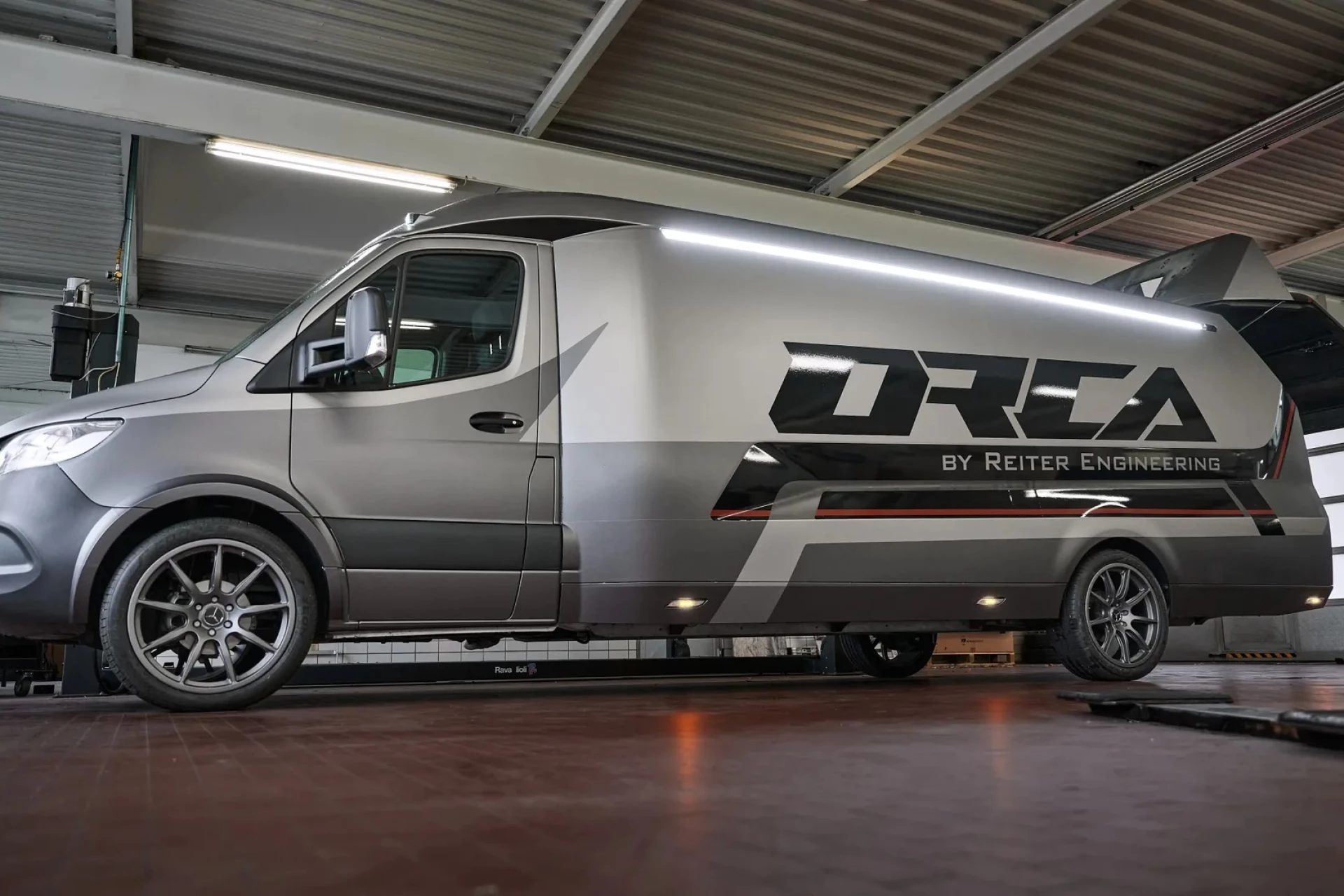
A radical new van concept built on the Mercedes-Benz Sprinter platform is offering a glimpse into the future of high-capacity camper conversions. Developed by Reiter Engineering, the newly revealed Orca transporter significantly expands the size and capability of a traditional cargo van.
Rather than simply modifying an existing vehicle, the Orca reimagines the van concept by combining a stretched platform with lightweight carbon-fiber construction. The result is a vehicle that delivers far more interior space and payload capacity while remaining within licensing limits for standard drivers in Europe.
For camper builders, motorsport teams, and commercial operators, the Orca introduces a new type of transporter designed for versatility and efficiency.
A Larger Van Built From a Familiar Foundation
The Orca begins with the cab chassis of the Mercedes-Benz Sprinter, but its dimensions extend well beyond factory configurations.
Reiter replaces the standard cargo body with a custom carbon-fiber shell that increases the vehicle’s size while reducing overall weight. This design provides greater cargo capacity without exceeding the 3,500-kg gross vehicle weight rating, which allows drivers to operate the vehicle with a standard passenger license in many European countries.
Size and Capacity Comparison
| Specification | Extra-Long Sprinter | Reiter Orca |
|---|---|---|
| Total Length | 737 cm | 799 cm |
| Width | 235 cm | 245 cm |
| Height | 261 cm | 268 cm |
| Cargo Volume | 15.5 m³ | 24.3 m³ |
| Dry Weight | ~2,404 kg | Under 1,800 kg |
| Payload | Limited by weight | Up to 1,600 kg |
This combination of increased interior space and reduced body weight dramatically improves payload capacity.
Carbon-Fiber Construction Changes the Game
The Orca’s most notable innovation is its full carbon-fiber body structure. Lightweight composite materials significantly reduce vehicle weight while maintaining strong structural rigidity.
This approach offers several advantages:
- Lower overall vehicle weight
- Increased payload capacity
- Improved structural strength
- Greater flexibility in body design
The roof structure is also designed to support up to 500 kilograms of additional load, making it suitable for rooftop storage systems, solar panels, or camping equipment.
Visually, the carbon-fiber shell also gives the vehicle a distinctive appearance with sculpted body lines and exposed composite elements.
Aerodynamic Design Improves Efficiency
Unlike traditional cargo vans with flat sides and boxy shapes, the Orca incorporates aerodynamic elements developed through airflow simulations.
The roofline slopes gently toward the rear, while an integrated spoiler helps direct air across the vehicle’s surface. These features improve stability at highway speeds while maintaining the large cargo compartment.
The van is capable of reaching speeds of around 161 km/h, making it practical for long-distance transport as well as daily commercial use.
Flexible Platform for Multiple Applications
While the Orca initially attracts attention as a motorsport transporter, its versatility makes it useful for several industries.
Potential uses include:
- Transporting race cars or motorcycles
- Commercial cargo operations
- Mobile workshops
- High-capacity camper van conversions
For motorsport teams, the large cargo area can replace traditional race transport trucks while offering easier maneuverability and lower operating costs.
Why Camper Builders Are Paying Attention
The Orca’s large interior space may be especially appealing to camper conversion companies.
Unlike many van-based campers that require pop-up roofs or compact layouts, the Orca offers standing height throughout the interior.
Interior Space Advantages
| Feature | Benefit |
|---|---|
| Interior headroom up to 200+ cm | Comfortable standing height |
| Large cargo volume | Flexible camper layouts |
| Strong roof structure | Supports solar panels or storage |
| Lightweight body | Allows heavier camper equipment |
This space allows builders to design more ambitious layouts, including multi-bed arrangements, larger kitchens, and full bathroom installations.
Interior Practicality and Limitations
Despite its advantages, the Orca does have some practical limitations.
The current configuration uses a two-door cab chassis that seats up to three passengers. For camper conversions aimed at larger families, this limited seating capacity may reduce practicality during travel.
A double-cab version could potentially solve this issue, though it would require structural changes and could reduce the available payload.
Powertrain Options
The Orca uses diesel engines sourced from the Mercedes-Benz Sprinter lineup.
Engine Options
| Engine | Power | Transmission |
|---|---|---|
| Base Diesel | 148 hp | 6-speed manual |
| Optional Diesel | 168 hp | 9G-Tronic automatic |
An all-wheel-drive option is not currently offered, although the company may expand the drivetrain lineup in future versions.
Production Plans and Pricing
Reiter Engineering has announced an estimated starting price of approximately €125,000 for the empty base vehicle.
Initial production will be limited, with the company planning to build between 75 and 200 units per year depending on demand.
Why the Orca Represents a New Direction
The Orca highlights an important shift in the van and RV industries. Lightweight materials and modular vehicle platforms are becoming increasingly important as manufacturers look to improve efficiency and maximize usable space.
By combining carbon-fiber construction with the proven reliability of the Mercedes-Benz Sprinter, Reiter Engineering has created a transporter that expands the possibilities for van-based vehicles.
For camper builders and businesses needing maximum cargo capacity without stepping up to a full-size truck, the Orca offers a glimpse of what the next generation of high-capacity vans could look like.