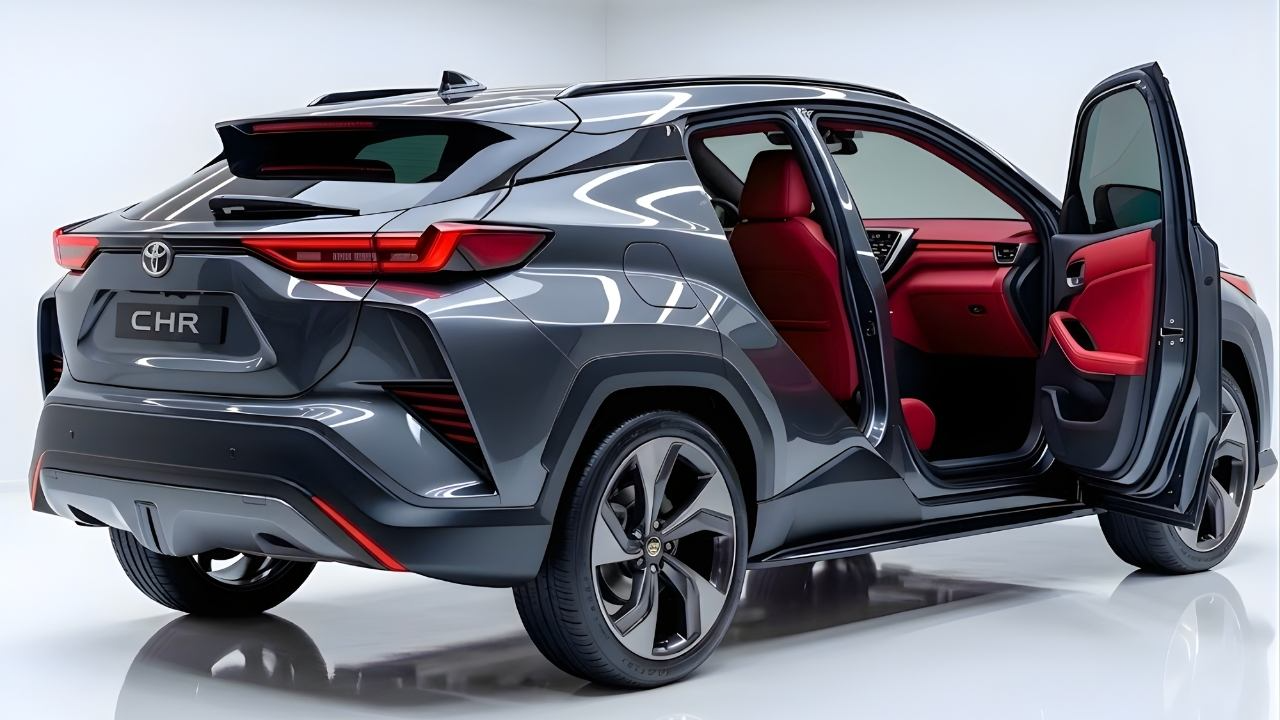
2026 Toyota C-HR Hybrid Revealed: Compact crossovers remain one of the fastest-growing segments in the automotive market, and the 2026 Toyota C-HR Hybrid arrives with a stronger focus on efficiency, technology, and bold styling. Designed for urban drivers and younger buyers, the new generation emphasizes hybrid performance while keeping pricing within reach.
With an estimated starting price around $27,500, Toyota positions the C-HR as an affordable hybrid SUV that blends modern design with practical fuel economy. Its updated hybrid powertrain delivers more power than before while maintaining the efficiency many buyers expect from Toyota’s electrified lineup.
2026 Toyota C-HR Hybrid Overview
| Category | Details |
|---|---|
| Vehicle Type | Compact Hybrid SUV |
| Powertrain | 2.0-liter Hybrid System |
| Total Output | Approx. 196 horsepower |
| Estimated Fuel Economy | Around 40 MPG combined |
| Starting Price | About $27,500 |
| Infotainment | 12.3-inch touchscreen |
| Safety Suite | Toyota Safety Sense |
Pricing and Trim Levels
The 2026 C-HR Hybrid is expected to be available in multiple trims, each offering a different level of comfort and technology.
| Trim | Estimated Price | Key Features |
|---|---|---|
| Base Hybrid | $27,500 | 12.3-inch touchscreen, Toyota Safety Sense, cloth interior |
| XLE Hybrid | $30,200 | Heated seats, larger wheels, wireless charging |
| Limited Hybrid | $33,000 | Leather seating, premium audio, 360-degree camera |
Among these options, the XLE Hybrid is likely to provide the best balance between price and equipment, adding several comfort features without moving into the highest price range.
Hybrid Powertrain and Driving Performance
196 Horsepower Hybrid System
The C-HR Hybrid uses Toyota’s latest hybrid system that pairs a 2.0-liter gasoline engine with electric motors. Together, the system produces roughly 196 horsepower, offering stronger performance than many competitors in the compact crossover category.
This power output helps the vehicle accelerate smoothly while maintaining the efficiency expected from a hybrid.
City Driving Experience
In urban traffic, the hybrid system delivers its biggest advantages. Electric assistance allows for quiet launches and smooth stop-and-go driving, making the SUV particularly comfortable during daily commutes.
Highway acceleration remains adequate for merging and passing, although the vehicle is designed primarily for efficiency rather than aggressive performance.
Fuel Economy and Running Costs
Efficiency is one of the C-HR Hybrid’s strongest selling points. Toyota estimates the compact SUV will achieve around 40 miles per gallon combined.
For drivers covering about 1,000 miles per month and using an average gasoline price of $3.40 per gallon, fuel costs remain relatively low.
| Monthly Driving Estimate | Value |
|---|---|
| Miles Driven | 1,000 miles |
| Fuel Economy | 40 MPG |
| Fuel Used | 25 gallons |
| Monthly Fuel Cost | Approx. $85 |
This places the C-HR among the more economical compact SUVs to operate on a monthly basis.
Exterior Design: Bold and Distinctive
Toyota has given the C-HR a striking design that stands apart from more traditional crossovers. The coupe-like roofline, sculpted body panels, and aggressive front fascia create a futuristic appearance.
Sharp LED lighting and bold character lines emphasize the vehicle’s sporty personality, helping it attract buyers who want something visually different in the compact SUV segment.
While the dramatic styling adds character, it also slightly reduces rear visibility compared with more conventional designs.
Interior Technology and Comfort
Modern Dashboard Layout
Inside the cabin, the C-HR features a modern dashboard highlighted by a large 12.3-inch infotainment screen. The system supports wireless Apple CarPlay and Android Auto, making smartphone connectivity simple and convenient.
Improved menu navigation also makes the infotainment system easier to use compared with earlier Toyota interfaces.
Passenger and Cargo Space
Front seat comfort is one of the C-HR’s strengths, with supportive seating and good forward visibility. Rear seating space works well for two adults, although the coupe-inspired roofline slightly limits headroom.
Cargo capacity ranges from about 19 to 25 cubic feet depending on seat configuration. This is slightly smaller than some rivals but still practical for daily errands and commuting.
Safety and Driver Assistance
Toyota continues to prioritize safety with its standard Toyota Safety Sense suite. Expected features include:
- Automatic emergency braking
- Adaptive cruise control
- Lane-keeping assistance
- Blind-spot monitoring
- Rear cross-traffic alert
Multiple airbags and advanced stability systems also contribute to overall occupant protection.
Official crash test ratings are expected after the vehicle becomes widely available, but Toyota’s safety reputation suggests competitive results.
Pros and Cons
Pros
- Excellent fuel efficiency
- Distinctive, futuristic styling
- Smooth and refined hybrid powertrain
- Strong reliability reputation
Cons
- Limited cargo space compared to some rivals
- Rear visibility slightly restricted
- Acceleration focused more on efficiency than performance
Final Verdict
The 2026 Toyota C-HR Hybrid focuses on the priorities that matter most for compact crossover buyers: efficiency, reliability, and distinctive design. While it may not offer the largest cargo area or the fastest acceleration in its class, it delivers impressive hybrid fuel economy and modern technology at a competitive price.
Also Read – 2026 Camaro Z28 Returns with 670 HP and Track-Focused Engineering
For drivers who want a stylish small SUV with low running costs and dependable hybrid engineering, the C-HR Hybrid stands out as one of the most practical choices in today’s compact crossover market.