
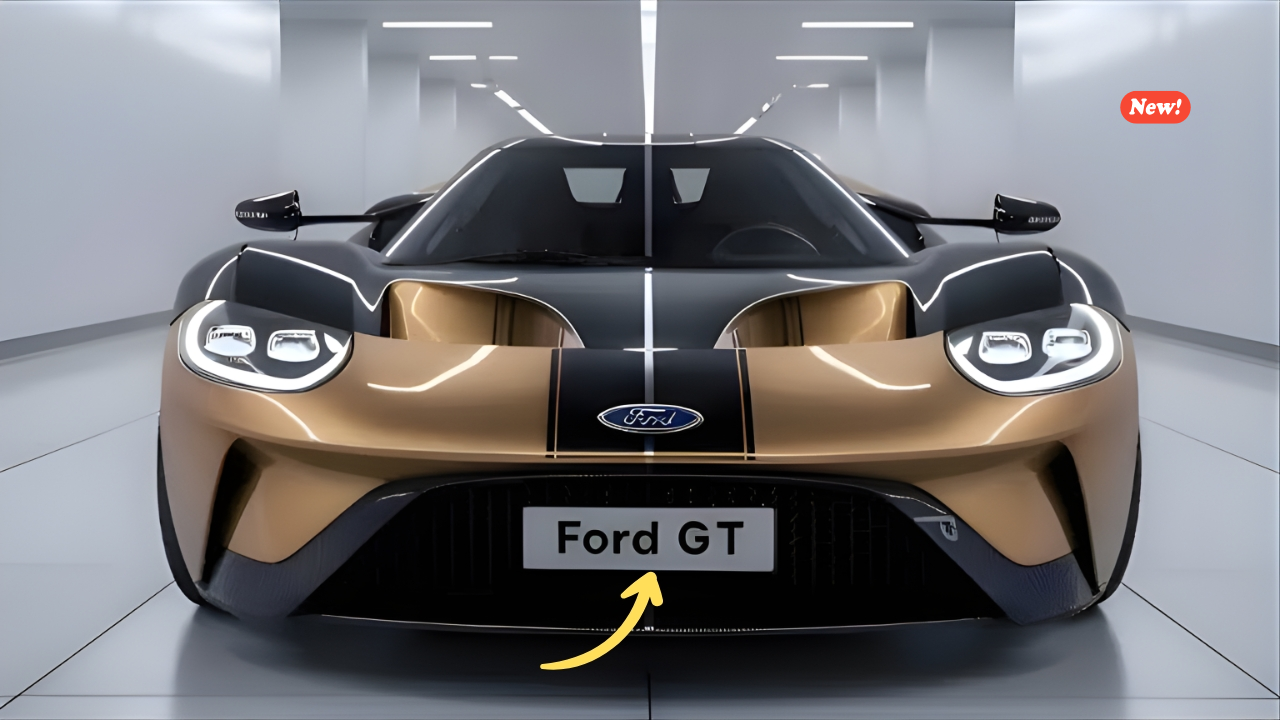
The Ford GT has always represented the pinnacle of Ford Performance engineering. Inspired by the legendary GT40 race cars that dominated endurance racing in the 1960s, the GT name has become synonymous with cutting-edge design and track-focused performance.
Now, excitement is building around the rumored return of the Ford GT for 2026. Early previews and development hints suggest the next-generation model could push deeper into hypercar territory with hybrid performance, advanced aerodynamics, and technology derived directly from motorsport.
If the new model follows these expectations, it could become one of the most technologically advanced American supercars ever produced.
Quick Overview
| Category | Details |
|---|---|
| Model | Ford GT |
| Model Year | 2026 |
| Segment | Hybrid Supercar |
| Powertrain | Twin-turbo V6 + electric hybrid system |
| Estimated Output | Over 900 horsepower |
| Transmission | Dual-clutch automatic |
| Focus | Track performance with advanced aerodynamics |
| Production | Limited and highly exclusive |
Racing Heritage Continues to Shape the GT
Few American cars have a racing history as significant as the Ford GT. The story began with the GT40, which famously defeated dominant European competitors at the 24 Hours of Le Mans during the 1960s.
Decades later, the modern Ford GT revived that spirit with a carbon-fiber structure, mid-engine layout, and extreme aerodynamic design. The upcoming 2026 version appears ready to build on that foundation.
Early test sightings suggest a mid-engine architecture combined with a highly sculpted aerodynamic body, reflecting the influence of modern endurance racing technology.
For Ford, the GT is more than just a halo vehicle—it serves as a platform to translate racing innovation into road-going performance.
Aerodynamic Design Focused on Performance
The next-generation Ford GT is expected to feature an aggressively sculpted body designed to maximize airflow and downforce.
A low, wide stance combined with advanced aerodynamic channels helps direct air around the car while cooling key components such as the engine and hybrid system.
Exterior Design Highlights
- Lightweight carbon-fiber body panels
- Ultra-low aerodynamic profile
- LED matrix headlamps
- Active rear wing for adjustable downforce
- Floating rear fenders with large airflow channels
These design elements are not only visually dramatic but also serve a critical role in improving high-speed stability and track performance.
Hybrid Powertrain With Hypercar-Level Output
The most significant upgrade expected in the 2026 GT is the addition of hybrid technology. The rumored system pairs Ford’s twin-turbocharged EcoBoost engine with electric motor assistance to deliver exceptional performance.
Electric motors can provide instant torque during acceleration while also improving traction and corner exit stability.
Expected Performance Specifications
| Specification | Expected Details |
|---|---|
| Engine | Twin-turbo 3.5L EcoBoost V6 |
| Hybrid System | Electric motor assistance |
| Estimated Power | Over 900 horsepower |
| Transmission | Dual-clutch automatic |
| 0–60 mph | Under 2.5 seconds (estimated) |
| Top Speed | Over 220 mph (expected) |
Hybrid torque vectoring may also enhance handling by distributing power more precisely across the drivetrain.
Driver-Focused Interior With Advanced Digital Tech
Inside the cockpit, the 2026 Ford GT is expected to retain a minimalist, race-inspired design. Lightweight materials such as carbon fiber and Alcantara will likely dominate the interior, emphasizing performance over luxury.
At the same time, the car will incorporate modern digital technology to provide drivers with real-time performance data.
Interior Technology Features
| Feature | Function |
|---|---|
| Fully digital instrument display | Driving data and vehicle status |
| Augmented reality head-up display | Projected performance information |
| Carbon-fiber steering wheel | Integrated driving controls |
| Performance telemetry system | Track and lap data analysis |
| Over-the-air software updates | Continuous software improvements |
The cockpit is designed to keep the driver fully engaged while providing the information needed during both road driving and track sessions.
Track-Focused Handling and Braking
Handling has always been a defining characteristic of the Ford GT. The 2026 model is expected to feature adaptive suspension that adjusts ride height and stiffness depending on driving mode.
Comfort modes will allow smoother road driving, while track modes may lower the vehicle and stiffen the suspension for improved grip.
Large carbon-ceramic Brembo brakes paired with high-performance tires should provide strong stopping power and durability under intense track conditions.
Limited Production Adds Exclusivity
Like previous generations, the 2026 Ford GT is expected to be produced in very limited numbers. This exclusivity is part of what makes the GT such a desirable vehicle among collectors and performance enthusiasts.
Production will likely remain in the United States, reinforcing the car’s identity as a uniquely American supercar capable of competing with the world’s most advanced exotic vehicles.
A New Era for Ford’s Iconic Supercar
The anticipated return of the Ford GT represents a bold step forward for the legendary nameplate. By combining hybrid performance, advanced aerodynamics, and race-developed technology, Ford appears ready to evolve its flagship supercar for the electrified performance era.
If the final production model delivers on these expectations, the 2026 Ford GT could once again demonstrate that American engineering belongs among the world’s most elite supercars.