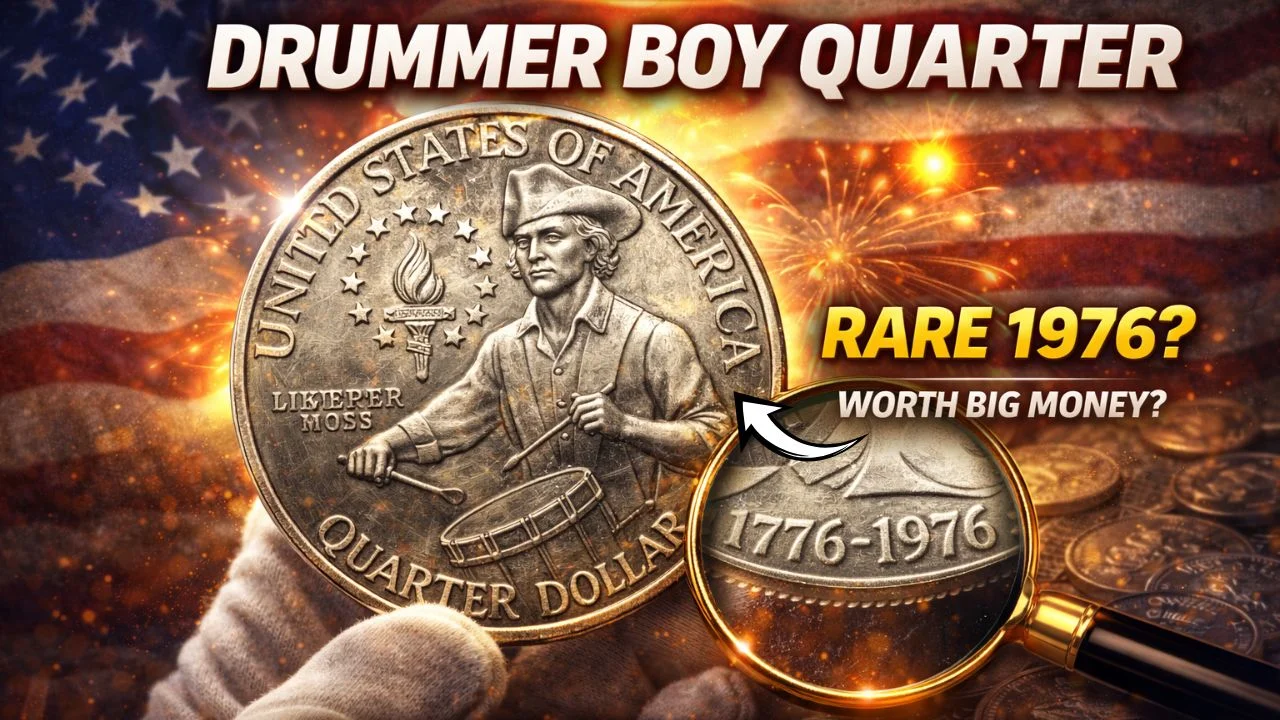
1976 Drummer Boy Quarter : In 1976, millions of Americans noticed something unusual in their pocket change. Instead of the familiar eagle on the back of the Washington quarter, a Colonial drummer boy appeared—marking the United States’ 200th birthday.
This special coin, known as the 1976 Bicentennial “Drummer Boy” Quarter, quickly became one of the most recognizable coins ever produced by the U.S. Mint. While most of these quarters remain common today, certain versions, silver editions, and rare mint errors can be surprisingly valuable.
For collectors and curious coin hunters alike, the Bicentennial Quarter remains a fascinating piece of American history.
The Story Behind the Bicentennial Quarter
The United States celebrated its bicentennial in 1976, commemorating 200 years since the signing of the Declaration of Independence in 1776.
To mark the occasion, the U.S. Mint redesigned the reverse side of three coins:
- Quarter
- Half Dollar
- Dollar
Each received a special patriotic design. The quarter’s reverse featured the now-famous Colonial drummer boy, symbolizing the spirit and courage of the American Revolution.
The Artist Behind the Design
The design was created by Jack L. Ahr, whose artwork was chosen through a national competition. His drummer boy design captured the theme of American independence and celebration.
Another unique detail is the coin’s dual date: “1776–1976.” Unlike normal coins that display a single year, this dual date immediately signals the historic bicentennial celebration.
Why the Drummer Boy Quarter Became So Popular
One reason the Bicentennial Quarter remains widely recognized is its massive circulation.
Millions of these coins were produced and spent across the United States, meaning many Americans encountered them in everyday change during the late 1970s.
But beyond nostalgia, collectors value the coin for several reasons:
- Unique historical design
- Connection to America’s bicentennial celebration
- Special silver collector editions
- Rare mint errors and high-grade examples
Even decades later, the coin still sparks curiosity among collectors and casual coin enthusiasts.
Silver Bicentennial Quarters: The More Valuable Version
While most Bicentennial quarters are made from copper-nickel clad, the U.S. Mint also produced 40% silver versions for collectors.
These coins were struck at the San Francisco Mint and sold in special collector sets rather than released into circulation.
Because of their silver content and limited production, these coins are typically worth more than regular quarters.
Key Differences Between Regular and Silver Versions
| Type | Composition | Mint | Typical Value |
|---|---|---|---|
| Circulation Quarter | Copper-Nickel | Philadelphia / Denver | $0.25 – $2 |
| Uncirculated Collector Coin | Copper-Nickel | San Francisco | $3 – $10 |
| Silver Bicentennial Quarter | 40% Silver | San Francisco | $10 – $30+ |
The condition of the coin plays a major role in its value. Coins that remain uncirculated with strong mint luster are especially appealing to collectors.
Rare Errors Collectors Search For
While most Bicentennial quarters are common, certain mint errors can make a coin much more valuable.
Collectors often examine these coins carefully looking for unusual features.
Valuable Error Types
Some of the most sought-after errors include:
- Doubled die errors – doubled lettering or numbers
- Off-center strikes – design not properly centered
- Die cracks or die breaks
- Wrong planchet errors (struck on another coin’s metal)
These mistakes occurred during the minting process and can significantly increase a coin’s collector value once authenticated.
How Much Is a 1976 Drummer Boy Quarter Worth Today?
For most people, the Bicentennial Quarter found in pocket change is still worth face value (25 cents). Because so many were produced, circulated examples are very common.
However, value increases with better condition and rarer varieties.
Estimated Value Range
| Condition | Estimated Value |
|---|---|
| Circulated | $0.25 – $1 |
| Uncirculated | $2 – $10 |
| 40% Silver Version | $10 – $30+ |
| Rare Error Coins | $50 – $500+ |
High-grade examples graded by professional services like PCGS or NGC may sell for even more depending on rarity and demand.
How to Identify a Valuable Bicentennial Quarter
If you find a 1976 Drummer Boy Quarter, a few simple checks can help determine whether it might have collector value.
Things to Look For
Check the mint mark
The mint mark appears near Washington’s ponytail.
- No mint mark = Philadelphia
- D = Denver
- S = San Francisco
Look for the silver edge
Silver versions do not show the typical copper stripe on the edge.
Use magnification
A magnifying glass can reveal doubling, die cracks, or other minting errors.
If a coin appears unusual or extremely well preserved, professional grading may help confirm its value.
Key Takeaways
- The 1976 Bicentennial Quarter celebrates America’s 200th anniversary.
- It features the iconic Colonial drummer boy design.
- Most examples remain common but still collectible.
- Silver editions and mint errors can be worth significantly more.
- Condition plays a major role in determining value.
For many collectors, the coin represents both history and nostalgia.
FAQs
Why does the Bicentennial Quarter have two dates?
The coin displays 1776–1976 to commemorate the 200th anniversary of the United States.
Are all 1976 quarters valuable?
No. Most are common and worth about face value, but silver versions and rare errors can be worth more.
How can I tell if my Bicentennial Quarter is silver?
Silver coins lack the copper stripe on the edge and typically have an “S” mint mark.
Were Bicentennial quarters made for multiple years?
Yes. The coins were minted in 1975 and 1976, but all carry the date “1776–1976.”
Should I get my coin professionally graded?
If your coin appears uncirculated, silver, or has a possible error, grading can help verify authenticity and value.
Final Thoughts
The 1976 Drummer Boy Quarter remains one of the most memorable coins ever released by the U.S. Mint. Its patriotic design and connection to America’s bicentennial celebration continue to attract collectors decades later.
While most examples are common, special silver editions and rare mint errors keep the hunt exciting. So the next time you check your change, take a closer look—that historic drummer boy might still hold a hidden surprise.